Author: siteadmin_milltown

  • Milltown Fire Safety: Local Information and Home Safety Guides

    Home fire safety planning

    Independent home fire-safety guidance for Milltown-area households

    This website is an independent publication. It is not the former Milltown Fire Department and is not operated by an emergency service.

    Emergency: Call 911. Leave the building, stay outside, and call from a safe location.

    Current local fire service

    Milltown is now served by Unity Fire Association, formed from the Milltown, Balsam Lake, and Centuria departments effective December 31, 2025.

    • Non-emergency phone: 715-825-2217 (leave a message)
    • Milltown station and mailing address: 129 Eider St, Milltown, WI 54858
    • General email: info@unityfireassn.com

    Verify current details through the Village of Centuria fire department page or the Village of Balsam Lake.

    Build a safer home

    • Make and practice a home fire escape plan.
    • Install smoke alarms in the right locations and test them regularly.
    • Keep cooking, heating, electrical, and candle risks under control.
    • Make your house number and driveway visible to responders.
  • How to Make a Home Fire Escape Plan

    Family home fire escape planning

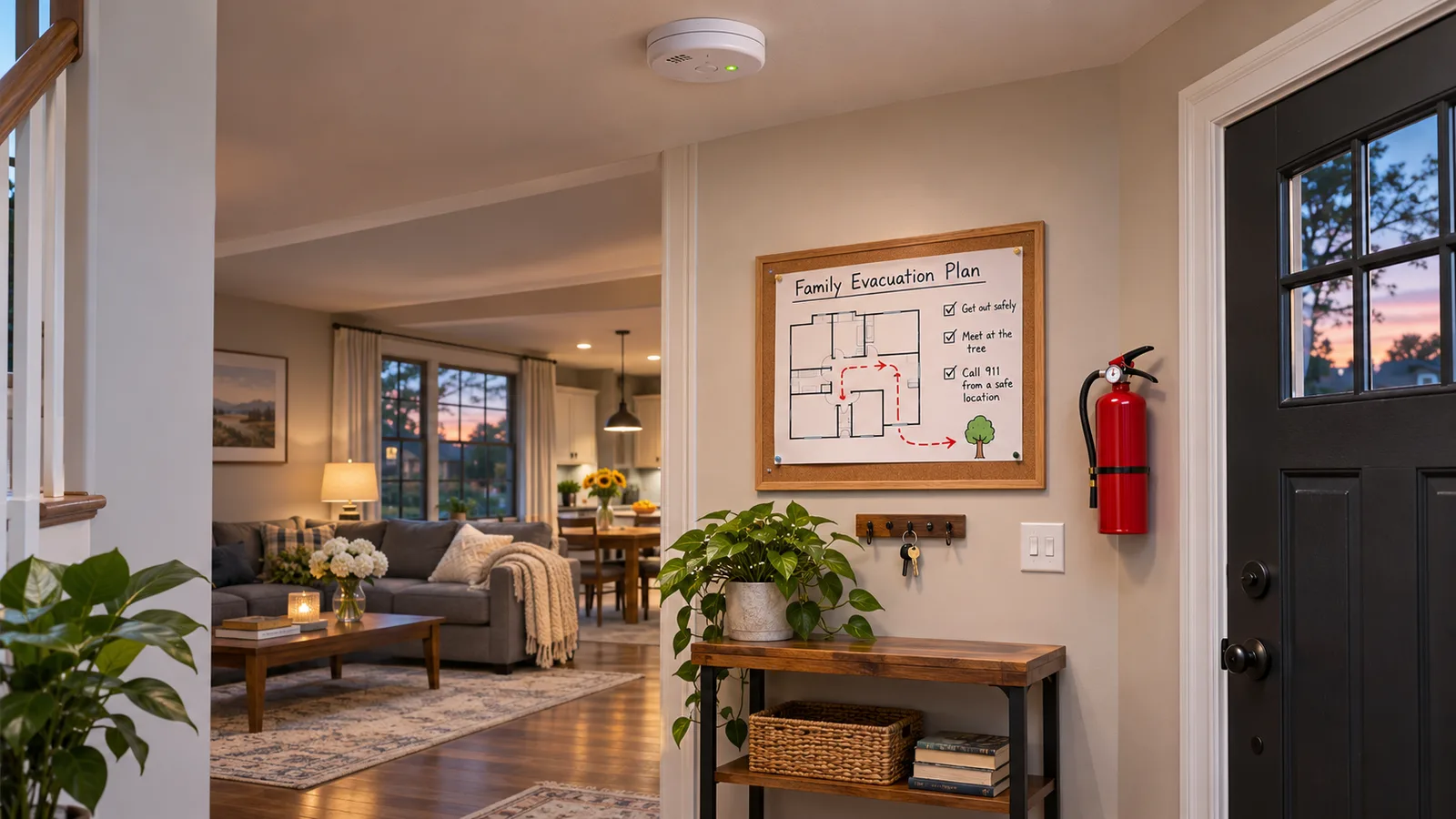
    A home fire escape plan turns a stressful emergency into actions your household has already practiced. The U.S. Fire Administration warns that residents may have less than two minutes to escape after a smoke alarm sounds.

    Draw the home and mark two ways out

    Sketch each floor and mark doors, windows, stairs, and smoke alarms. Identify two possible exits from every bedroom and living area. Never depend on a window that is painted shut or an exit blocked by furniture or security hardware.

    Pick one meeting place

    Choose a visible location a safe distance in front of the home, such as a specific mailbox or neighbor’s driveway. Everyone should go to that same place so nobody re-enters looking for someone who is already safe.

    Assign help before it is needed

    Plan for children, older adults, visitors, pets, and anyone with mobility, hearing, or vision limitations. Assign a primary helper and a backup. The NFPA escape-planning guide also recommends making the house number clearly visible from the road.

    Practice twice a year

    Run a drill during the day and another when lights are low. Practice moving to the safest exit, closing doors behind you, meeting outside, and accounting for everyone.

    Once outside, stay outside

    Call 911 from a safe location and tell the dispatcher if anyone may still be inside. Do not go back for people, pets, medicine, or valuables. Review the plan whenever the household or room layout changes.

  • Smoke Alarm Placement: A Room-by-Room Guide

    Smoke alarms provide the warning that makes an escape plan possible. The U.S. Fire Administration recommends alarms on every level, inside each bedroom, and outside every separate sleeping area.

    Bedrooms and sleeping areas

    Place an alarm inside every bedroom and another in the hallway outside. If sleeping rooms are separated into different parts of the house, each area needs nearby coverage. Closed doors can delay smoke reaching a hallway alarm.

    Every level, including basements

    Install at least one alarm on each level. In a basement, place it near the stairs leading upward and follow the manufacturer’s mounting instructions. Larger floors or closed-off rooms may need extra alarms.

    Kitchens and bathrooms

    An alarm should be close enough to protect the area without sitting where normal steam causes repeated nuisance alarms. Follow the maker’s distance guidance. Never disable an alarm because it sounds during cooking.

    Interconnect when possible

    Interconnected alarms all sound when one detects smoke, giving people on another floor more warning. Use compatible products and follow local requirements.

    Test and replace

    Press the test button monthly. Replace batteries when required and replace the entire alarm according to its date, commonly after ten years. People who are deaf or hard of hearing may need strobes, vibrating pads, or another compatible alert system.

    Keep exits clear, practice the escape plan, and treat every alarm as a reason to leave and call 911 from outside.