Cold weather changes how a home is used. Portable heaters come out of storage, fireplaces may run for hours, decorations share outlets, and an outage can bring a generator into the picture. A winter fire safety check is most useful before the first hard freeze and again when routines change.
This checklist is for ordinary household prevention. If a fire or carbon monoxide alarm sounds, leave the building and call 911 from outside. Do not delay evacuation to finish a checklist.
1. Make space around heat sources
The U.S. Fire Administration’s heating guidance says to keep anything that can burn at least three feet from fireplaces, wood stoves, radiators, portable heaters, and candles. Look for curtains, bedding, paper, laundry, furniture, and seasonal decorations. Recheck the clearance after moving a chair or bringing gifts into the room.
Never use an oven to heat the home. Have heating equipment and chimneys cleaned and inspected each year by a qualified professional, and address problems before regular use.
2. Check portable heaters before plugging them in
Set a space heater on a stable, level surface where it cannot be knocked over. Keep it away from walking routes and the three-foot clearance zone. Turn it off when leaving the room or going to bed.
The USFA heating safety handout says to plug a portable heater directly into a wall outlet, never an extension cord or power strip, and to choose a unit from a recognized testing laboratory with an automatic tip-over shutoff. Follow the specific product instructions. A damaged cord, loose plug, unusual smell, sparks, or repeated breaker trip is a reason to stop using the equipment and arrange a repair or replacement.
3. Give fireplaces and stoves a separate check
Put a glass or metal screen in front of a fireplace to keep sparks in. Do not burn paper in a fireplace or wood stove, and extinguish the fire before sleeping or leaving home. Once ashes are completely cool, place them in a covered metal container outdoors, at least ten feet from the house and other buildings. The USFA handout gives these steps along with annual chimney inspection advice.
4. Keep generators outdoors and prevent carbon monoxide exposure
Carbon monoxide is invisible and has no smell. During an outage, a portable generator must never run in a home, garage, basement, carport, or partly enclosed porch, even with doors open. The CDC’s carbon monoxide guidance says to operate it outdoors more than 20 feet from windows, doors, and vents. Follow the manufacturer’s operating and electrical-connection instructions, and use a battery-powered or battery-backup carbon monoxide alarm indoors.
Never use a gas oven, charcoal grill, or camping stove to heat indoor rooms. If someone has a headache, dizziness, weakness, nausea, chest pain, or confusion near fuel-burning equipment, get everyone into fresh air and call 911. Do not reenter until responders say it is safe.
5. Test alarms and keep both exits usable
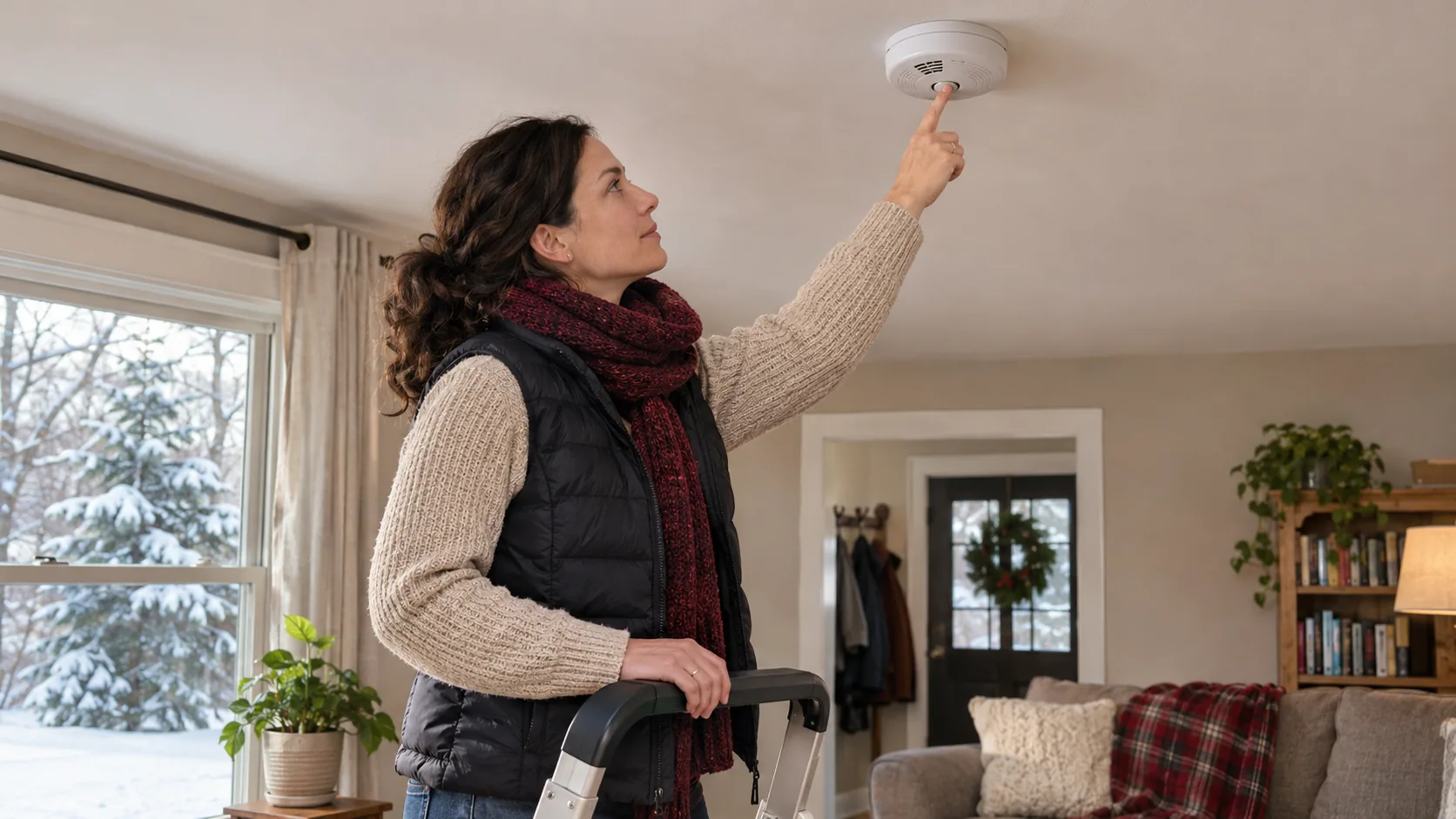
Test smoke and carbon monoxide alarms according to their instructions and replace batteries and units when due. Review our room-by-room smoke alarm guide to check coverage. A working alarm matters only if everyone can respond to it.
Walk the routes in your home fire escape plan. Keep doors, halls, stairs, and windows clear of stored winter gear. Check that the outdoor meeting place and house number remain visible after snow or ice. Practice how children and guests would get outside without going back for belongings.
6. Review outlets, decorations, and the kitchen
Check light strings and power cords for damage before use. Follow their indoor or outdoor rating and the manufacturer’s connection limits. Keep decorations clear of heaters and exits. Avoid crowding an outlet with heat-producing appliances. Turn decorative lights off before sleeping or leaving.
Place a suitable fire extinguisher where adults can reach it without moving toward a fire; our home extinguisher placement guide explains the tradeoffs. An extinguisher never replaces a clear exit. If a fire is spreading or anyone is unsure, leave and call 911.
A ten-minute winter check
- Clear three feet around heaters, fireplaces, stoves, radiators, and candles.
- Inspect portable heaters; plug them directly into a wall outlet and turn them off when leaving or sleeping.
- Schedule heating-equipment and chimney inspection if due.
- Keep generators outdoors, more than 20 feet from openings, with a working carbon monoxide alarm indoors.
- Test alarms, review two ways out of each room, and keep the outdoor meeting place reachable.
- Check cords, seasonal lights, and the visibility of the house number.
Repeat the check after a storm, a furniture move, a new heater purchase, or holiday decorating. Small changes around heat and exits can undo a safe setup.