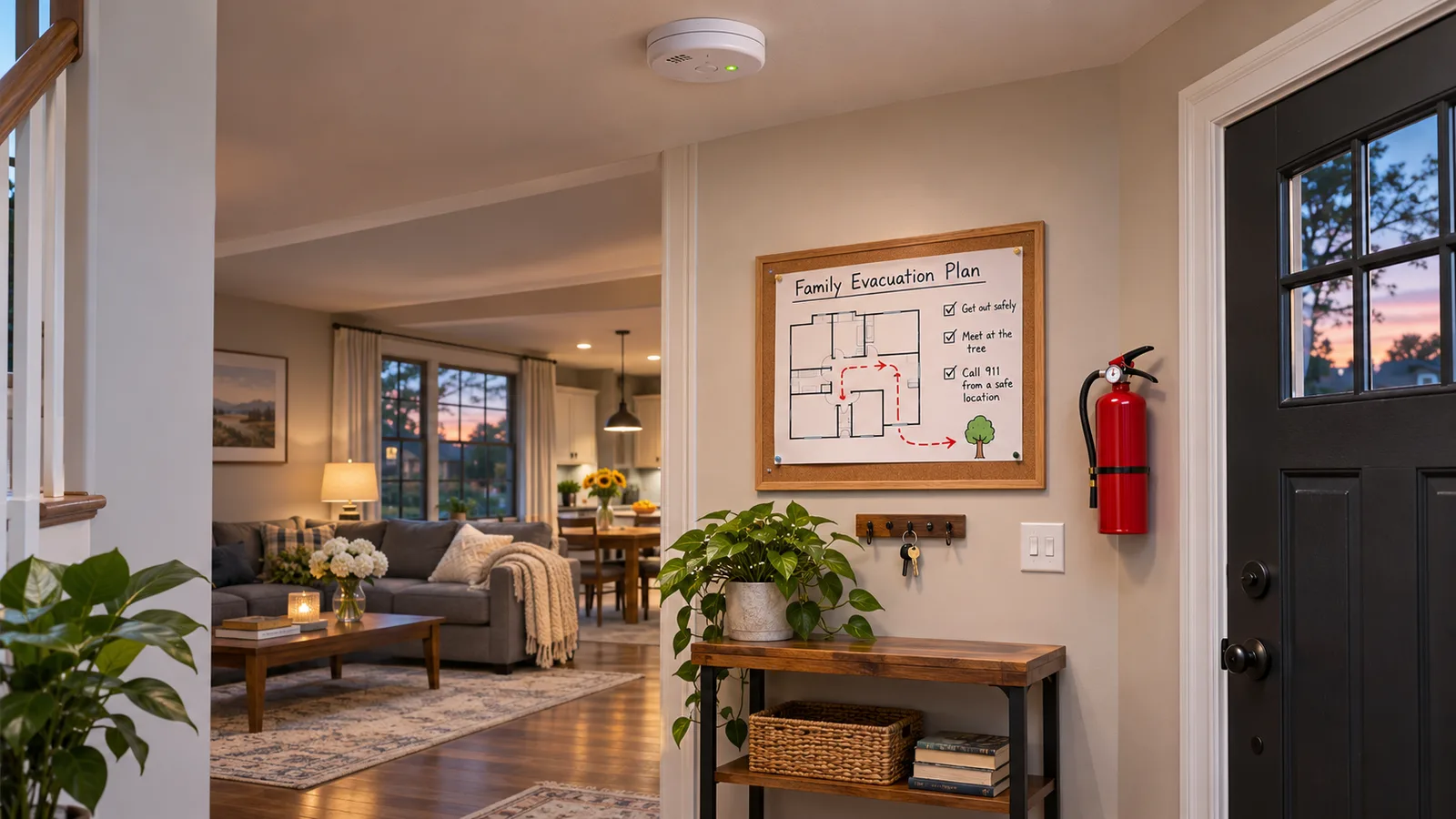
A home fire escape plan turns a stressful emergency into actions your household has already practiced. The U.S. Fire Administration warns that residents may have less than two minutes to escape after a smoke alarm sounds.
Draw the home and mark two ways out
Sketch each floor and mark doors, windows, stairs, and smoke alarms. Identify two possible exits from every bedroom and living area. Never depend on a window that is painted shut or an exit blocked by furniture or security hardware.
Pick one meeting place
Choose a visible location a safe distance in front of the home, such as a specific mailbox or neighbor’s driveway. Everyone should go to that same place so nobody re-enters looking for someone who is already safe.
Assign help before it is needed
Plan for children, older adults, visitors, pets, and anyone with mobility, hearing, or vision limitations. Assign a primary helper and a backup. The NFPA escape-planning guide also recommends making the house number clearly visible from the road.
Practice twice a year
Run a drill during the day and another when lights are low. Practice moving to the safest exit, closing doors behind you, meeting outside, and accounting for everyone.
Once outside, stay outside
Call 911 from a safe location and tell the dispatcher if anyone may still be inside. Do not go back for people, pets, medicine, or valuables. Review the plan whenever the household or room layout changes.